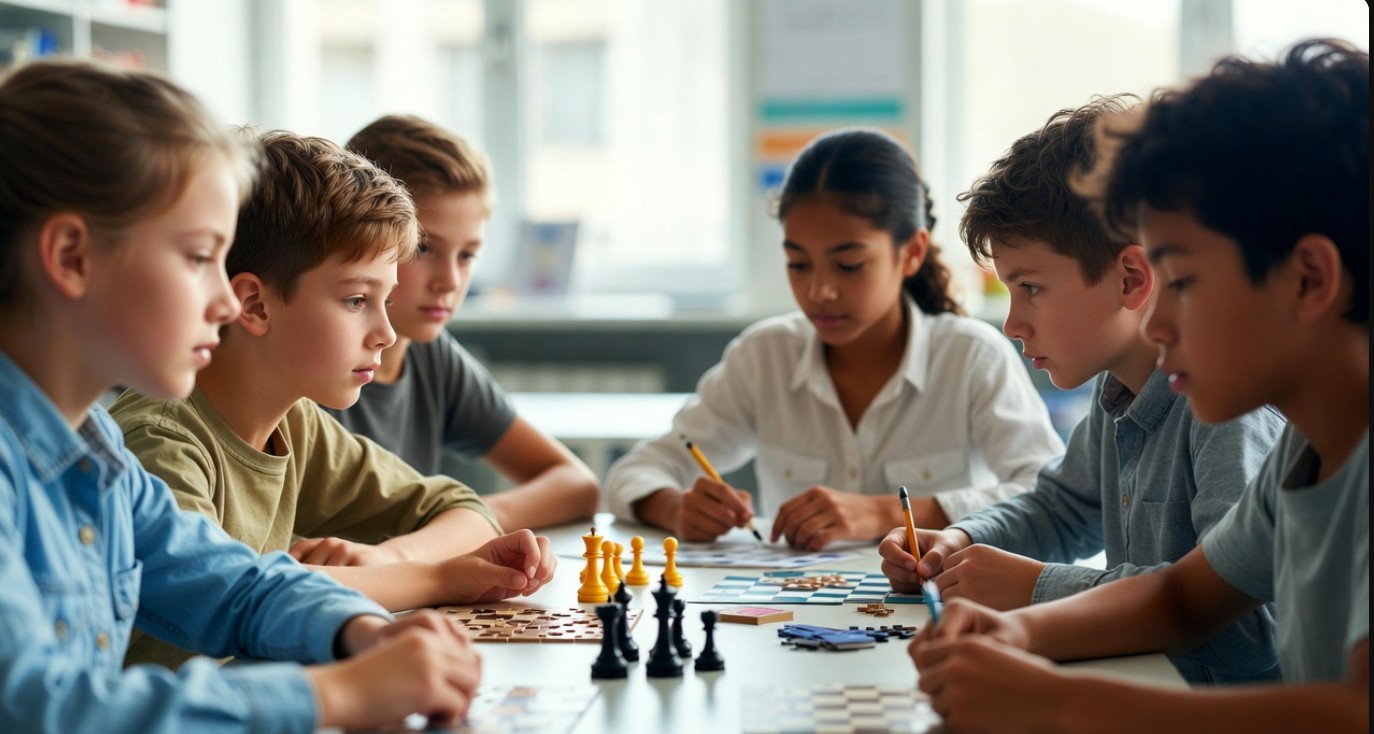
Brain Games for Middle Schoolers: Boost Memory, Logic, and Creativity
Table of Contents
Middle school is a stage where memory, logic, and reasoning begin to shape how students learn. Smart choice of brain games for middle schoolers makes learning easier without feeling forced. Logic puzzles, word challenges, and memory-based games help students organize information, identify patterns, and think flexibly.
These games enhance their visuospatial skills, which play a critical part in understanding maths, science, and problem-solving tasks. Moreover, structured learning leads to better concentration and confidence levels outside of class.
Why Brain Games Are Important to Middle School Students
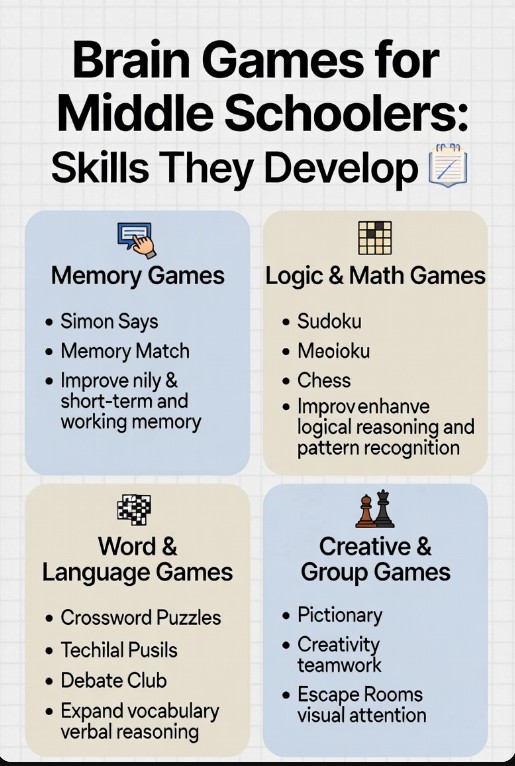
Brain games are important as they teach children to perform in real-life situations. Skills such as remembering a locker combination — practice that exact skill with our sequence memory game — following classroom instructions, and keeping track of homework can be improved through regular use of memory games for kids. A properly constructed learning platform or the best memory app that engages the brain in daily memory exercises will convert practice into faster thinking.
Memory and Logic-Boosting Games
Thinking pattern challenges are also important in the early years when systems of reasoning and memory are still being developed. The best brain games for middle schoolers go beyond entertainment; they are designed to teach students to concentrate, think logically, and be adaptable:
“Brain games aren’t just fun — they are powerful tools for improving memory, reasoning, and overall cognitive agility in middle schoolers.”
Board & Physical Games
One of the most well-known and respected options is chess. It stimulates problem-solving, planning, and critical thinking by requiring children to think through several moves. At this age, the brain is learning impulse control, and chess strengthens executive functions by rewarding thoughtful, deliberate decisions.
Another game that helps promote language development is Scrabble. The game engages vocabulary, spelling, and word memory. It also encourages students to use language skills creatively. One of the most accessible educational board games allows students to experience socialization through competitive spirit.
Logic & Math Puzzles
As for logical reasoning, it is possible to improve it by working with structured puzzles. Sudoku, for example, enhances logic and pattern recognition in a way that does not involve arithmetic, making it one of the most efficient among the concentration games.
Cryptogram is another way to improve logic. It requires students to solve coded messages, which enhances adaptable problem-solving skills. Finally, mazes develop the ability to focus and be patient by having to plan moves logically and in advance, without taking actual actions.
Word & Memory Games
Language-based games offer another level of cognitive benefit. Crossword puzzles integrate the use of vocabulary with prior knowledge, which is important for word-level retrieval and semantic association.
Boggle, meanwhile, as one of the most recognized word games, builds the skill of selecting appropriate words in a short time, whereas number memory games develop the use of short-term memory in learning.
Creative and Group Brain Activities
It’s crucial for a child to develop innovative thinking and learn to work in a team. It will help middle school-going children discover the power of problem-solving. Observation, imagination, and teamwork help build stronger connections between neurons, which makes learning fun.
For example, Spot the Difference improves visual attention skills by encouraging students to focus on minute details, an important quality for good class attention. In contrast, activities like Pictionary combine artistic talents with communication skills. Such activities develop creative, perspective-taking, and teamwork skills.
There are digital options that can complement these activities. Examples of modern memory apps include Elevate brain training or MentalUP. With them, individuals can work on improving attention, memory, and working speed. Together, these games turn everyday learning into a habit of thinking, not just remembering. Want a fun way to kick things off? Have your student try a quick memory test to see their starting point before diving into these games.