How to Assess and Track Your Brain Power Improvements Using a Proven Memory System
Table of Contents
Professionals and lifelong learners have always tried to track brain power improvements accurately. Casual exercises, irregular challenges, or sporadic self-tests cannot help assess real cognitive growth and memory development. The memory is fragile, metrics are unreliable, and logs are unorganized.
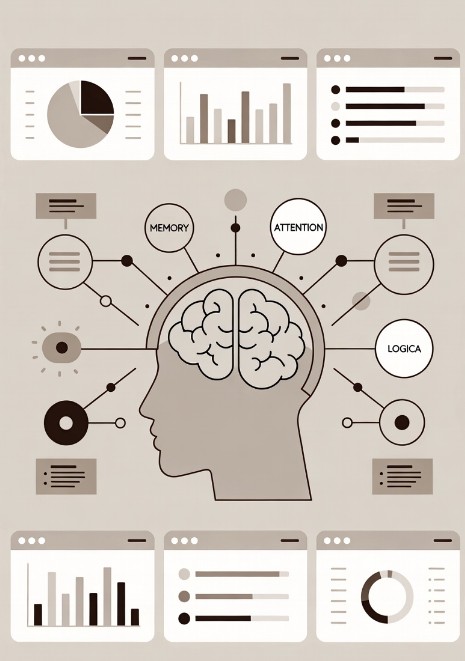
The key to achieving a real understanding of progress is to have a reliable system for systematically measuring memory, attention, logic, and mental acuity. Well-organized systems like memoryOS turn disorganized practice into properly tracked data. It enables learners to view skill progress patterns.
Why Most Brain Power Tracking Fails
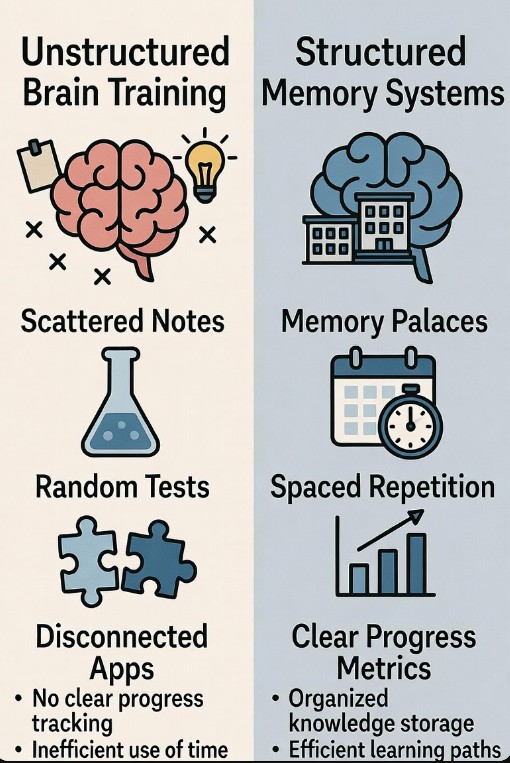
Cognitive functions have multiple dimensions, encompassing memory, concentration, problem-solving ability, and processing speed. Random tests or apps can only generate unclear data points. This creates a sense of progress where none has actually been achieved.
The forgetting curve and lack of structured retrieval further impair the ability to encode data. Without repeated measurement and systematic encoding, attempts to assess cognitive performance rarely track real patterns.
“Tracking your brain power isn’t about isolated tests — it’s about structured logging, repeated practice, and a system that turns knowledge into lasting skill.”
Organized tools such as memoryOS help with these limitations. Mind palaces, spaced repetition, micro-lessons, and progress tracking turn scattered practice exercises into data-driven skill improvement. This is how mental progress can be tracked and measured.
Core Methods to Measure Cognitive Skills
Knowing how to assess different types of brain activity can help get a clear picture of cognitive growth.
Memory
Word or number recall and working memory exercises reveal short-term capacity, but single sessions provide limited data. In contrast, memoryOS supports repeated practice through memory games and mind palaces, reinforcing retention.
Attention & Focus
Stroop tests and reaction time tasks help track attention control. However, for reliable, continuous analysis of attention exercises, memoryOS provides structured assessments over time. Attention results are tracked and graphed by memoryOS. It means that learners can view real improvements.
Logic and Reasoning
While reasoning challenges in puzzles, Sudoku, or chess, as well as IQ-style challenges, can test logic and problem-solving, pattern recognition is a strong feature of memoryOS that provides insight into progress, enabling learners to measure mental agility. Cognitive training, in this context, is now an evidence-based process where trial and error is eliminated.
Lifestyle and Habit Monitoring
Assessing cognitive strength requires more than just cognitive tracking tools. For example, data about sleeping patterns from Sleep Cycle or SleepScore or diet tracking through MyFitnessPal can also offer extra mental performance metrics. Such metrics deliver an understanding of the impact of lifestyle on focus, memory, and problem-solving.
Integrating memory and cognitive training into daily living activities enables users to consistently apply their skills, transforming disconnected activities into strong brain gains. Combined with insights from lifestyle metrics, this approach allows learners to connect daily habits with real improvements, creating a holistic view of brain power development.
How memoryOS Turns Data into Long-Term Insight
Memory training programs such as memoryOS turn chaotic mental activity into coherent, long-term insight. The information learned through exercises, lessons, and games is encoded in organized mind palaces, forming a strong mental architecture. Such architecture ensures reliable recall and brain training progress.
Mnemonics, spaced repetition, and micro-lessons offered by the app reinforce these patterns and transform fleeting practice into durable ability. Moreover, a centralized dashboard consolidates performance metrics from memory tests, attention exercises, and logic challenges.
This approach enables learners to monitor their brain power enhancement. This helps them relate daily practice to measurable progress. By integrating the various activities into a single and coherent system, memoryOS turns fragments of data into actionable insight to help professionals and students track brain power improvements and identify where cognitive growth is strongest. Curious to see your own numbers? Our free working memory test and sequence memory test are a quick way to start tracking that growth yourself.