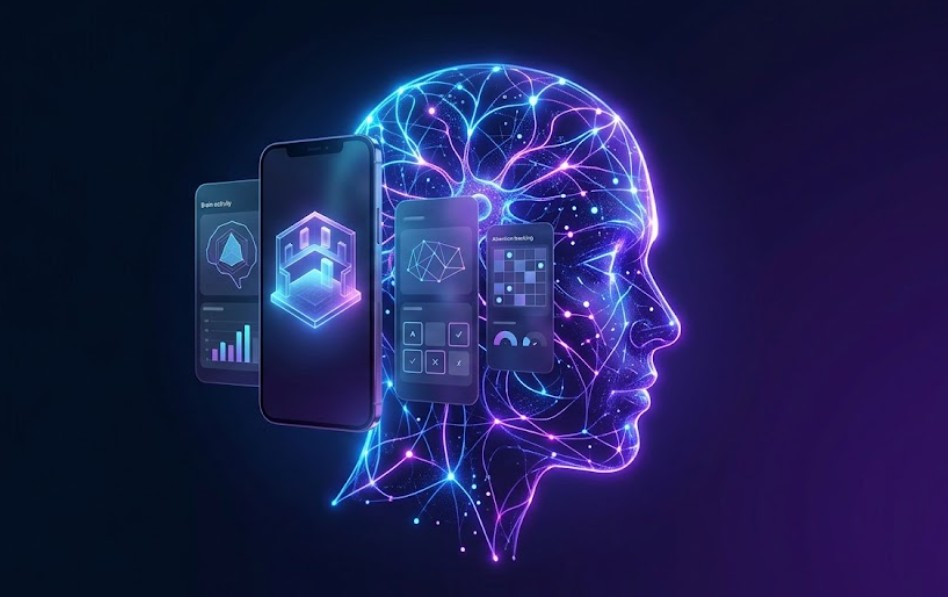
Apps That Make You Smarter: Top Apps and AI-Powered Tools Tested and Ranked (2026)
Table of Contents
The adult brain is a well-structured network that is constantly being reorganized based on experiences. Every decision, distraction, and action you take either enhances or inhibits the strength of connections in your brain.
Focused concentration, novelty, and challenge are the best stimulants for brain growth, whereas passive scrolling through information, data overload, and distractions cause a fragmentation of attention that inhibits cognitive depth. In other words, what you focus on is what you reinforce.
Cognition is a complex process that involves the coordination of multiple brain systems. Attention is responsible for filtering information that enters the brain, while working memory is responsible for retaining information for a short period of time. Long-term storage is a function of long-term memory that involves a complex process of encoding information before it is stored.
When these three processes are synchronized, cognitive processes are smooth and effortless; however, when they are not synchronized, even the simplest mental activity becomes mentally exhausting, which is why the quality of input is more important than the quantity.
Most developers of apps that make you smarter tend to be very focused on engagement. Gamification. Rewards. Streaks. These things get people to come back to their apps. However, they do not necessarily ensure improvement. The real challenge lies deeper. It is how to improve how the brain encodes, processes, and retrieves information.
This is where a new design philosophy emerges. Unlike apps to improve how smart you are, memoryOS was built on top of cognitive architecture. It was not built on how people interact with apps. It was built on how people think and how to improve their memory.
Can Apps Actually Make You Smarter? The Honest Answer
The short answer is: Yes. But only if certain conditions are met. Not all cognitive apps are equally effective. The distinction lies in their capacity to engage the brain’s core systems.
It is important to first understand what it means to be “smarter.” In cognitive science, this is often related to fluid intelligence, or the capacity to reason, solve new problems, and adapt to new and unfamiliar situations. This is different from memorization. It is more about being mentally flexible and efficient.
Being “smarter” within a given task is possible through most cognitive apps. You become faster, more accurate, and more confident. The question is whether this translates to everyday thinking and learning. Unfortunately, this is where most apps fail.
Working memory training evidence suggests mixed but promising outcomes. Working memory is the cognitive system responsible for the temporary storage and manipulation of information. Training this cognitive system can improve attention control and cognitive problem-solving under specific conditions. However, the effectiveness depends on the training’s intensity, structure, and relevance. If you want to test that kind of training yourself, try our number memory game and sequence memory test.
So, how to increase intelligence in a more practical sense? By targeting the systems rather than the shortcuts. While brain games may seem appealing, apps that offer adaptive training and structured encoding strategies are much more likely to show improvements. They do not merely challenge your brain; they change the way it functions.
One of such apps is memoryOS, and it engages the cognitive system responsible for learning. By combining spatial memory and active recall strategies, memoryOS can improve cognitive functions beyond the app. This is the key to increased cognitive efficiency and productivity, the same idea behind techniques like Sherlock’s mind palace technique.
Ultimately, apps do not increase intelligence. However, the right apps can train the cognitive systems responsible for increasing intelligence.
Apps That Make
You Smarter
An interactive tool to understand cognitive domains, filter top-ranked apps by goal, and build your personalized brain-training stack.
Focus → Memory → Intelligence
Understanding the cognitive stack: each layer builds on the one below it. Tap a block to learn more.
Filters relevant stimuli. Divides noise. Essential for initial input — without focus, no learning occurs.
Encodes & recalls information. Repetition builds connections; structured learning (like a Memory Palace) increases speed.
Reasoning, problem-solving, pattern recognition. Uses Memory & Focus together for complex, novel tasks.
Tap each block to expand
Filter by Cognitive Goal
Select one or more goals to highlight the best apps. Your picks feed the Stack Recommendation below.
Personalized Recommendation
Based on your selected goals above, here’s your optimal app combination.
Consult a healthcare professional for personalized recommendations.
Intelligence vs. Memory vs. Focus: Which Are You Training?
The majority of people want to get smarter, but rarely do they define what they mean by this. Intelligence improvement is based on cognitive science and understanding how different types of intelligence interact with each other. However, without a defined goal of what exactly improvement means, even the most sophisticated app is just a waste of time.
Let’s break it down.
Memory is the base unit. It dictates how information is encoded and recalled. The process is simple: repetition increases neural connections, and structured learning increases speed and accuracy. However, if memory is lacking, learning is inefficient. It is like constantly re-reading the same book.
Focus is what dictates what actually makes it into your cognitive system. It is a simple process: attention filters out noise and focuses on relevant stimuli. However, if focus is divided between too many different things, then there is no time for in-depth learning and processing.
Intelligence, especially reasoning, sits on top of both of these systems. Intelligence involves recognizing patterns, problem-solving, and adapting to new situations. The underlying mechanism of this involves the use of working memory and cognitive flexibility.
These systems are interlinked, and without this, the following problems occur: without focus, memory leads to inconsistency; without memory, focus leads to stagnation; without both, intelligence leads to instability.
So, the takeaway here is that the best tools do not train any of these in isolation; rather, they integrate these into one complete package, and this is where true cognitive improvement begins.
Top Apps That Make You Smarter in 2026 (Ranked)
When it comes to determining the top apps that make you smarter, the key is not to look at the popularity of the app, but rather to see if the app is actually working on the underlying cognitive mechanisms. The following is a curated list of the top apps that are beyond entertainment and into cognitive improvement.
memoryOS
memoryOS takes a system-first approach. It uses a combination of memory palaces, active recall, and adaptive progression. This is different from other apps, which are based on mini-games. It helps build a mental system that enhances critical thinking in everyday life, including remembering, organizing, and applying information under pressure.
Brilliant
Brilliant is based on problem-solving, including interactive lessons in math, logic, and science. It helps improve critical thinking skills through interactive learning. It forces users to think step by step, rather than passively consuming information. It is deep, but it is not particularly focused on memory systems.
Duolingo
Duolingo is primarily a language learning app, but it also helps improve memory, attention, and pattern recognition. It is based on a game-like system, but it requires users to be committed beyond their daily streak.
Anki
Anki stands out as one of the best tools for long-term retention. It uses spaced repetition to efficiently improve memory. Although Anki is highly effective, it demands self-discipline and lacks a structured approach for new users.
Elevate
Elevate focuses on cognitive skills that are useful in real-life situations, such as reading, writing, and numerical skills. Although Elevate excels in real-life applications, it focuses on improving skills rather than cognitive restructuring.
Peak
Peak includes short cognitive exercises in different cognitive areas, with a focus on gamification. Peak excels in keeping users engaged, although real-life applications might be lacking.
BrainHQ
BrainHQ focuses on improving processing speed and attention, with exercises designed by neuroscientists. Although BrainHQ is highly accurate, its interface lacks a contemporary feel compared to other brain training apps.
CogniFit
CogniFit is a tool for personalized cognition tests and training. It is also helpful in tailoring training based on performance, making it ideal for improvement.
NeuroNation
NeuroNation is another tool for brain workouts. It is helpful in improving memory, logic, and attention. The tool is ideal for users who want improvement in different areas of cognition.
MosaLingua
MosaLingua is a tool for learning new languages. It is also helpful in improving working memory and pattern recognition. The tool is ideal for users who want to improve their brains and learn a new language at the same time. This brain-boosting app is based on science, making it ideal for both purposes.
AI-Powered Apps: What “AI” Actually Does for Your Brain
Cognitive training has changed significantly with the advent of AI learning apps, moving beyond static exercises to dynamic and responsive training systems. The question, however, remains: what does “AI” actually do, and does it really make a difference?
Adaptive algorithms are the heart of any AI-powered cognitive training app. These algorithms analyze your performance in real-time, including your speed, accuracy, and error rate, to adjust the level of difficulty accordingly, keeping you at the optimal level of challenge without causing boredom or frustration.
Adaptive algorithms enable true personalization of cognitive training, as the app does not follow a predetermined path but rather evolves along with the user. For instance, if your memory is improving but your attention is not, the app will shift its focus accordingly, creating a feedback loop where the training is constantly aligned with the user’s cognitive state.
The idea fits well with the zone of proximal development—a theory of learning that states that you learn best when you are challenged just beyond your current ability. AI makes sure you’re always in that zone, which is a key part of the learning process.
This is why new apps to make you smarter are now using AI more often. Instead of just using generic exercises, these new apps create a tailored cognitive environment for you. This means you learn faster, retain more information, and get the most out of your time.
If you’re interested in using these apps to increase IQ in the long term, then you should understand that generic tools are now being replaced with much more efficient smart systems that adapt, refine, and optimize your sessions.
One of the most important things that many new smart apps for learning have now adopted is the theory of spaced repetition. If you’re interested in understanding “what is spaced repetition”, then you should try modern AI-powered training.
The broader category of brain apps that increase intelligence and brain-boosting apps now exists under a more advanced paradigm: smart brain & cognitive enhancement. These apps do not simply challenge your limits; they expand them.
Under the categories of best AI apps for memorization and best brain training apps, the key factor is obvious: apps utilizing AI, learning methodology, and cognitive psychology achieve the results. The APA’s *Intelligence: Knowns and Unknowns* states that intelligence is not static; it can be influenced by the environment. AI simply speeds this process.
Ultimately, AI does not replace work; it makes work precise, targeted, and maximally effective.
Apps for Boosting IQ: Realistic Expectations
Not all apps claiming to improve your IQ can actually do so. While apps to increase IQ often involve puzzle games and other engaging formats, the benefits may not be directly applicable to real-life situations. The main point to understand is fluid intelligence training, which is the cognitive ability to solve problems and adapt to new situations. Apps claiming to improve IQ are more likely marketing tools than evidence-based tools.
Realistic users should look for programs that improve working memory, attention, and reasoning capacity over time. For example, memoryOS and BrainHQ are programs that increase the difficulty of the exercises to improve the neural connections in the brain, which are essential for realistic cognitive improvement.
While no app can promise that you will increase your IQ overnight, by practicing the cognitive exercises, you can improve your fluid intelligence and cognitive abilities, making you more effective at everything you do.
Cognitive improvement is essential in the modern world, and the right app can be the key to unlocking your true potential.
How to Stack Apps for Maximum Cognitive Gain
While using one app is certainly useful, stacking different apps together can greatly increase the overall effect. The idea behind stacking different apps together is based on the neuroplasticity & brain training idea, as different exercises stimulate different neural networks, resulting in cognitive reinforcement.
Start by combining memory-based training, such as memoryOS, with another app that focuses on logic and problem-solving, such as Brilliant. Finally, language training, as provided by Duolingo or MosaLingua, will stimulate the verbal and pattern recognition aspects of the brain.
It is important to note that the different types of training will also prevent the user from plateauing, as memory, logic, attention, and skill-based training are required to stimulate different neural networks in the brain.
Lastly, real-life practice: use memory techniques in real-life situations or solve real-life problems. This blend of structured app training, routine, and real-life practice creates a synergistic effect, which speeds up cognitive progress exponentially, far beyond the capabilities of a single app. Thoughtfully stacking these apps creates a comprehensive, high-impact cognitive workout.
FAQ
Can apps really increase your IQ?
Yes, you can increase certain skills within your IQ with the help of apps. Working memory training apps can increase fluid intelligence, though not overall IQ.
What is the best app for making you smarter?
That depends on the type of intelligence you want to improve: Duolingo for languages, Brilliant for logic, memoryOS or Anki for memory, BrainHQ for cognitive fitness in general, or a combination of apps for different cognitive skills.
Are AI-powered learning apps better than regular apps?
Yes, because these apps are designed to adjust difficulty levels according to performance, keeping you in the zone of proximal development, where you are challenged, yet not overwhelmed, thereby ensuring maximum efficiency in learning.
How long does it take for brain apps to make you smarter?
Task-specific improvements can be observed in 3-4 weeks of daily use, whereas real-life improvements, such as faster recall, increased focus, and enhanced learning, can take 6-8 weeks.
Is there a free brain app that makes you smarter?
Yes, Anki, a spaced repetition app, is completely free, and research supports its effectiveness, whereas Duolingo and Khan Academy also have free versions. The memoryOS app offers a free version as well, though the paid version offers greater adaptive personalization.
Train Your Brain with memoryOS – Free Trial Now Available!
Unlock your cognitive potential with memoryOS, which offers a powerful combination of 3D Memory Palace, spaced repetition, and AI-based adaptive training for improved memory, concentration, and real-life recall. Thousands of adults are improving their thinking, learning, and productivity with memoryOS every day!